
What Are the Most Common Industrial Uses for Fibreglass Grating?
Fibreglass grating, also known as FRP grating, is one of the most versatile industrial products available for marine, wastewater, oil and gas, construction, and other harsh environments. Its strength, corrosion resistance, and lightweight design make it a better alternative to metal grating in many settings. Whether you are looking at fibreglass grating panels, heavy-duty fibreglass grating, or corrosion-resistant grating, this guide breaks down the most common industrial applications so you can see where it performs best.
What Makes Fibreglass Grating Ideal for Marine Dock Grating and Marina Walkways?
In saltwater environments, steel or aluminum grating can corrode quickly. Dock grating made from fibreglass grating resists saltwater and UV damage. It is strong, lightweight, and allows water to drain freely, keeping wet surfaces safer. Anti-slip fibreglass grating is especially valuable for marina walkway panels.
Why is FRP Grating Widely Used in Wastewater Treatment Plant Grating and Clarifier Covers?
Industrial fibreglass floor grating is perfect for walkways, platforms, and clarifier covers where constant exposure to moisture and chemicals occurs. It won’t rust, rot, or corrode like steel. Using fibreglass grating load tables and span tables ensures the grating can safely handle traffic.
How Does Fibreglass Grating Support Oil and Gas Industry Applications?
FRP grating vs steel grating comparisons show that fibreglass is non‑conductive and chemically resistant, making it ideal for refinery walkways, pipe racks, and offshore platforms. Using pultruded fibreglass grating supplier products helps maintain strength over large spans. Its corrosion resistance also reduces maintenance compared to steel alternatives.
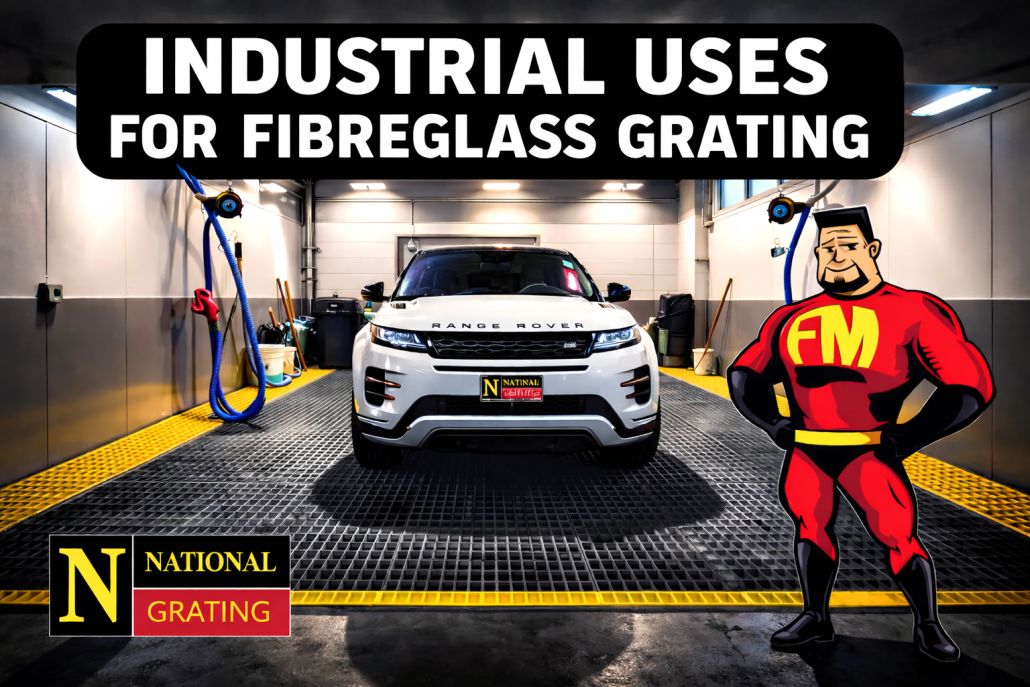
What Makes FRP Trench and Drain Grating Products Good for Car Washes?
Fibreglass trench and drain grating provides reliable water drainage while resisting corrosion from cleaning chemicals in car wash applications. Anti-slip fibreglass grating ensures vehicles and pedestrians stay safe, and its low weight per square meter makes installation easy.
Why Do Aquaculture Companies Choose FRP Walkway Grating Applications?
Walkways in aquaculture environments need chemical-resistant fibreglass grating that won’t corrode or rot. Mini-mesh fibreglass grating drains water quickly, preventing the buildup of algae and debris. Lightweight fibreglass decking panels simplify installation on fish farm platforms.
How Does FRP Grating Help in Rooftop Pedestals and Construction Applications?
Fibreglass rooftop paver pedestal grating supports tiles or light loads while resisting weather and corrosion. Fibreglass structural framing systems or modular FRP platform systems provide strong, durable walkways and mezzanine structures. Using fibreglass grating load tables ensures panels meet structural requirements.
Why Do Many Industries Prefer FRP Over Metal or Wood?
Fibreglass grating is lightweight, corrosion-resistant, and non‑conductive. It’s also easy to install and reduces maintenance costs in harsh environments. Pultruded fibreglass structural shapes and prefabricated FRP platforms allow for versatile industrial applications.
What Other Industries Use Fibreglass Grating?
Beyond marine, wastewater, and oil and gas, fibreglass grating panels are used in power plants, manufacturing floors, transportation infrastructure, and chemical processing facilities. Applications include fibreglass catwalk systems, fibreglass mezzanine framing, and FRP equipment support frames. Its durability and long service life make it suitable for high‑traffic areas.
What Should You Consider When Choosing Fibreglass Grating Products?
Consider load capacity, chemical resistance, slip resistance, and panel sizes. Molded fibreglass grating supplier products offer excellent corrosion resistance, while pultruded fibreglass grating supplier options offer higher load capacity and longer spans.
Fibreglass grating is a durable, corrosion-resistant, and low‑maintenance solution for many industrial applications. From dock grating in marine environments to industrial fibreglass floor grating in wastewater plants, FRP grating delivers long-term performance and safety.
Ready to find the perfect fibreglass grating solution? Contact National Grating for expert guidance, quotes, and access to fire-retardant fibreglass grating, chemical-resistant fibreglass grating, vinyl ester fibreglass grating, and more.
Frequently Asked Questions (FAQ)
Can fibreglass grating be used in high-temperature environments?
Certain FRP grating products, like vinyl ester and fire-retardant fibreglass grating, can withstand elevated temperatures, making them suitable for industrial plants and rooftop applications where heat resistance is required.
How do I determine the right FRP grating type for chemical exposure?
Consider the chemical resistance of the resin used. Vinyl ester and phenolic FRP grating are highly resistant to acids, alkalis, and solvents. Use chemical compatibility charts to ensure safe long-term performance.
Is fibreglass grating suitable for heavy-duty traffic areas?
Pultruded fibreglass grating and heavy-duty fibreglass grating panels can handle industrial traffic loads. Always reference fibreglass grating load tables and span tables to select the correct thickness and support spacing.
How does fibreglass grating compare to wood for outdoor applications?
Fibreglass grating is far more durable than wood. It resists rot, warping, and insect damage, while providing a lightweight, low-maintenance solution ideal for docks, walkways, and mezzanine platforms.