Why Is FRP Marine Decking a Better Fit for Wet, High-Traffic Areas?
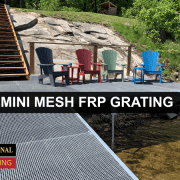
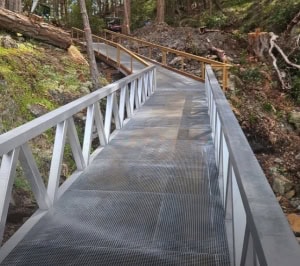
Marine decking has a hard job. It sits in the sun, gets soaked by rain, handles salt spray, and takes daily foot traffic from workers, boaters, carts, tools, and dock equipment. Wood can rot. Steel can rust. Painted surfaces can chip and become slick. That is why more marinas, dock builders, waterfront facilities, and industrial sites are considering FRP grating as a practical decking option. Fibreglass grating is light, strong, slip-resistant, and built for wet environments where corrosion is a constant concern. National Grating supplies FRP products for docks, decks, marinas, boardwalks, and other marine applications, including mini-mesh FRP grating that allows water and air to pass through while providing safe footing.
Why does marine decking need corrosion-resistant grating?
Marine decking needs to withstand wet, salty conditions. Salt water, moisture, and humidity can wear down materials fast. FRP grating will not rust like steel, so docks and marinas can spend less time on repairs, repainting, and replacements.
In marine areas, decking is almost always dealing with water. Waves splash up from below, rain collects on top, and saltwater leaves a crust behind as it dries. If the material is not designed for that kind of wear, it will break down sooner.
People often compare FRP grating and steel grating for this exact reason. Steel is strong, but it usually needs paint, galvanizing, or another coating to help stop rust. If that protective layer gets scratched, rust can begin to form. Fibreglass grating panels differ in that their corrosion resistance is inherent to the material.
For marinas, piers, floating docks, boat slips, ramps, and service platforms, that matters. Less rust means fewer sharp edges, fewer weak spots, and less time spent fixing problem areas.
How does fibreglass grating improve safety on docks?
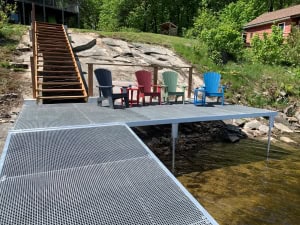
Fibreglass grating improves dock safety by providing a more stable walking surface in wet conditions. Anti-slip fibreglass grating can help reduce slips on docks, ramps, walkways, and marine work platforms.
Wet wood can get slick. Smooth metal can be dangerous when rain, algae, fish residue, or fuel mist are present. Dock grating needs to give boots and shoes something to grip.
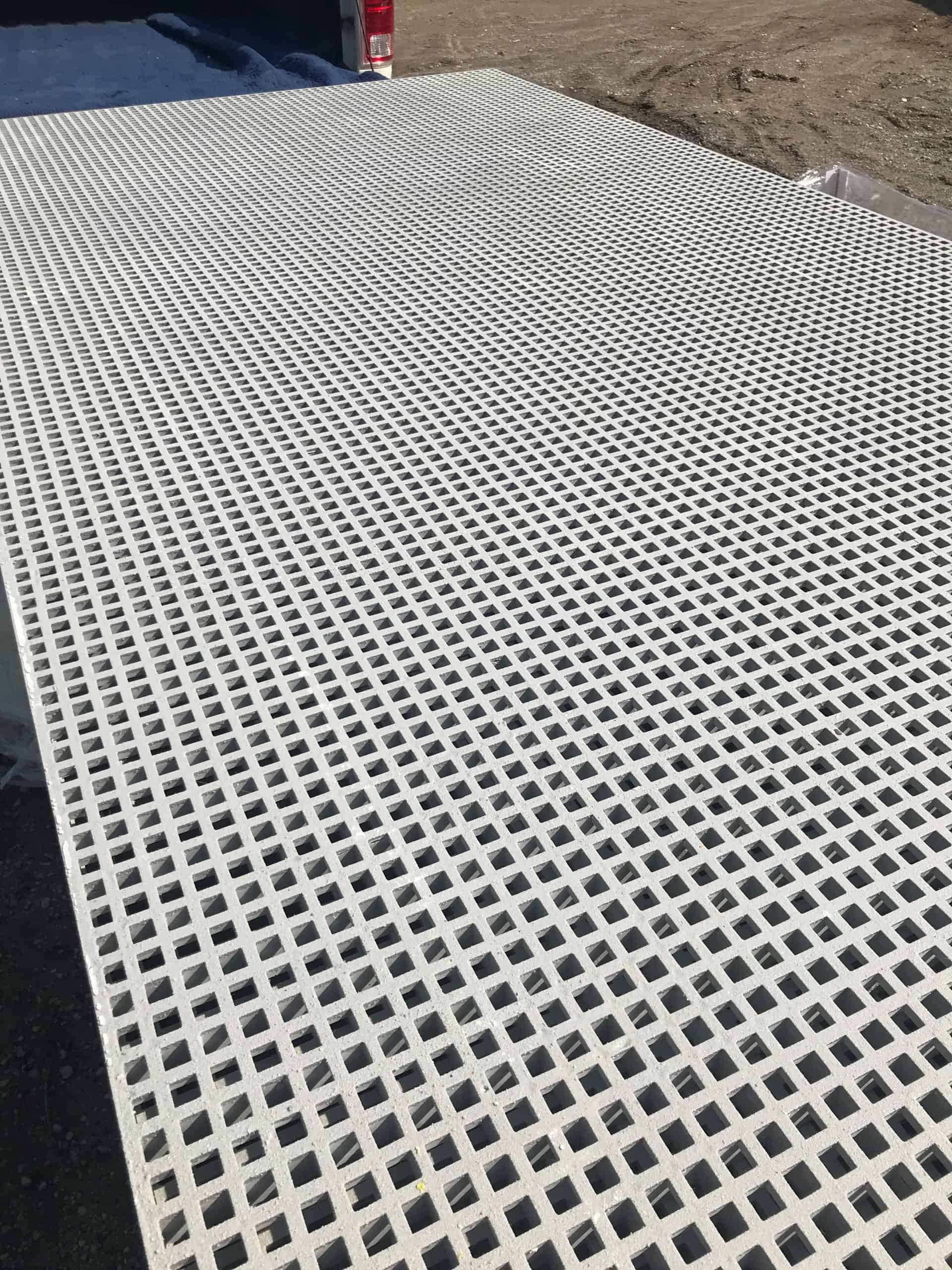
Many FRP grating products feature a grit surface. That added texture improves traction without requiring loose mats or temporary coatings. Mini mesh fibreglass grating can also be useful where smaller openings are preferred, such as pedestrian docks, public walkways, and areas where carts or small wheeled vehicles may pass over the surface.
Good decking does not just hold weight. It helps people move with confidence.
Why is FRP grating a good choice for busy marinas?
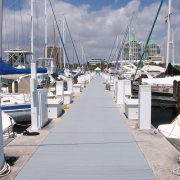
FRP grating is a good choice for busy marinas because it handles foot traffic, weather, and moisture without the weight and rust concerns of steel. It works well for dock grating, ramps, platforms, and access walkways.
A marina deck sees more than casual walking. It may need to support dock carts, maintenance staff, coolers, fuel equipment, hoses, storage bins, and service crews. Heavy-duty fibreglass grating can be selected for higher load needs when the span and support layout require it.
Near water, the right grating needs to do more than fit the opening. Load and span tables help you choose the proper thickness, mesh style, support spacing, and strength for the job.
How does FRP grating weight help with installation?
The FRP grating’s weight is an advantage, as fibreglass panels are typically lighter than steel grating panels. That can make shipping, lifting, cutting, and dock installation easier for contractors and maintenance teams.
A lighter deck panel can make a big difference on the job site. It is easier for crews to carry, position, and install, especially when they are working over water or around boats.
The weight of FRP grating per square meter depends on the panel style, thickness, resin, and mesh. Still, many teams choose fibreglass decking because it is easier to move than heavy steel sections. That can be useful for new builds, dock repairs, seasonal upgrades, and remote waterfront sites.
What other FRP materials can support a marine decking project?
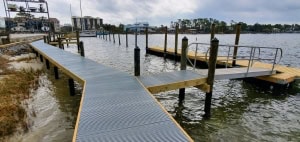
Other FRP materials can support marine decking by adding structure, framing, handrails, and equipment support. Options may include fibreglass beams, fibreglass square tube, FRP tubing, and pultruded fibreglass structural shapes.
Some dock and platform projects need more than deck panels. They may also need corrosion resistant structural framing, fibreglass structural framing systems, FRP platform systems, or prefabricated FRP platforms. National Grating notes that, in addition to FRP floor grates, it also carries structural FRP products, including plates, decking, beams, angles, and tubes for handrail systems.
These materials can help create full marine access systems, not just walking surfaces. They are useful for platforms, catwalks, mezzanine areas, equipment frames, and waterfront maintenance zones.
Ready to choose marine decking that can handle wet conditions?
If you are planning a dock, marina, boardwalk, access platform, or waterfront repair, FRP grating is worth a close look. National Grating can help you compare molded fibreglass grating, pultruded fibreglass grating, mini-mesh fibreglass grating, heavy-duty fibreglass grating, and FRP structural shapes for your project. Contact National Grating today to request a quote and find the right marine decking for your site.
FAQ
Is FRP marine decking comfortable to walk on?
Yes. FRP marine decking can be comfortable for everyday foot traffic when the right mesh and surface are chosen. Mini mesh fibreglass grating is a good option for walking areas because the smaller openings feel steadier underfoot.
Can fibreglass grating be cut to fit around dock posts?
Yes. Fibreglass grating panels can often be cut to fit around posts, cleats, rails, pipes, and dock edges. Use the proper tools, safety gear, and sealing practices as recommended by the supplier.
Is fire-retardant fibreglass grating available?
Yes. Fire retardant fibreglass grating is available for projects where fire performance matters. Before ordering, buyers should check the resin type, required rating, and project specs.
What is the difference between molded and pultruded FRP grating?
Molded FRP grating is a good choice when you need corrosion resistance and multidirectional strength. Pultruded FRP grating is better for longer spans or heavier loads. The right option depends on the deck layout and what the grating needs to support.