
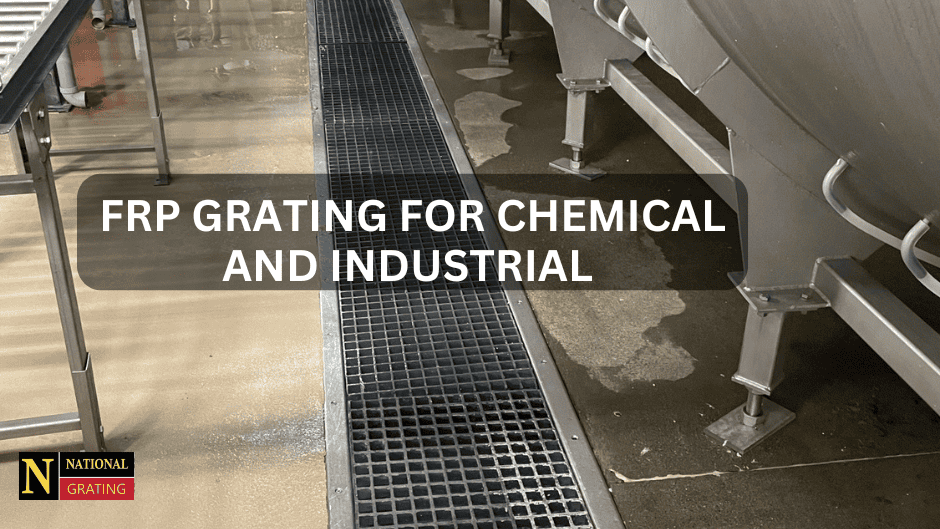
What Makes FRP Grating a Better Fit for Chemical and Industrial Facilities?
In chemical and industrial settings, materials do not have an easy life. Floors stay wet. Equipment leaks. Washdowns happen regularly. Corrosive exposure is part of the job. That is why facility managers and project teams often move away from traditional steel and toward fibreglass grating. In the right environment, it lasts longer, needs less upkeep, and helps keep walkways and work platforms safer. National Grating supplies FRP grating and structural FRP products across North America, offering a large inventory, strong customer service, and dependable quality.
Why is steel often a problem in chemical and industrial environments?
Steel usually does not hold up as well in wet or chemical-heavy areas, which often means more repairs and more downtime. In many industrial plants, the real problem is not just wear from daily use. It is constant exposure to moisture, chemical splash, and regular washdowns. Steel grating may be fine in a dry part of the facility, but in harsher areas, rust can become a real problem. Once it starts, it can spread, weaken the grating, and turn into more maintenance than people expected. That is why a lot of buyers looking at FRP are thinking about long-term value, not just the upfront cost.
Why does fibreglass grating make more sense in these spaces?
It resists corrosion, handles moisture well, and is easier to work with during installation. This is where fibreglass grating stands out. It is built for harsh environments where corrosion is a constant issue. It is also lighter than steel, which makes it easier to move, cut, and install on-site. In a busy industrial setting, that matters. Crews do not want a flooring system that turns every repair or replacement into a major job. Corrosion-resistant grating simplifies both installation and long-term maintenance, especially in processing plants, chemical-handling areas, and outdoor industrial sites.
What type of FRP grating is best for industrial use?
The best choice depends on traffic, spans, and the aggressiveness of the environment. Molded fiberglass grating is often a strong fit for walkways and platforms because it offers good corrosion resistance and dependable grip. In areas with longer spans or loads that are mainly supported in one direction, pultruded fiberglass grating can be the better choice. In high-use areas, heavy-duty fiberglass grating may be needed to support larger loads and more demanding service conditions. The point is not to choose the most expensive option. It is to match the product to the job.
Why does slip resistance matter so much on plant walkways and platforms?
Wet surfaces, residue, and foot traffic can quickly turn a normal walkway into a hazard. Industrial safety is not only about load capacity. It is also about footing. In chemical and industrial environments, spills, mist, residue, and weather can all affect the walking surface. That is why anti-slip fiberglass grating is such a practical option. In some settings, mini-mesh fiberglass grating also makes sense because it offers a tighter surface that helps with smaller objects, heels, and added foot stability. These details matter on stair treads, elevated platforms, access ways, and service routes where people move all day.
How do resin options affect performance in chemical areas?
The resin helps determine how well the grating withstands the specific environment. Not every industrial site has the same level of exposure. A general manufacturing area may need one level of protection, while a chemical processing zone may require a higher level. That is where vinyl ester fiberglass grating often comes into the conversation. It is commonly chosen for more aggressive corrosive environments. Depending on the application, buyers may also need chemical-resistant or fire-retardant fiberglass grating. Choosing the right resin and surface type is one of the most important factors for achieving long-term performance.
Is FRP only used for floor grating?
FRP is also used for framing, platforms, and support structures throughout industrial facilities. Many buyers start by looking for industrial fiberglass floor grating, but FRP is often part of a larger system. Industrial sites may also use pultruded fibreglass structural shapes, fibreglass square tube, FRP tubing, and fibreglass beams for elevated access systems and support framing. These products can be used in FRP platform systems, fibreglass catwalk systems, and corrosion-resistant structural framing. That makes FRP useful not just for replacing old grating, but for building complete access and support structures in corrosive areas.
Why do inventory and service matter as much as the product itself?
Long lead times and poor support can slow down repairs, shutdowns, and new construction. In industrial work, delays cost money. If a plant is waiting on replacement grating or a platform system, the material supplier matters just as much as the product specs. National Grating has a wide variety of in stock inventory, excellent customer service, and high-quality products.
Chemical and industrial sites need materials that can take real abuse and still do their job safely. Fibreglass grating gives facilities a practical option for corrosive areas, wet walkways, elevated platforms, and structural systems that need to last. If you are planning a new build, retrofit, or replacement project, contact National Grating to find the right FRP grating and structural products for your site.
FAQs
Can fibreglass grating be cut to fit around pipes and equipment?
Yes. It can be fabricated to fit around existing layouts, making it useful for retrofit work and in tight industrial spaces.
Is FRP grating a good choice for outdoor industrial platforms?
Yes. It is often used outdoors because it resists corrosion and performs better in wet conditions than many traditional materials.
What is the difference between molded and pultruded grating?
Molded grating is often used for general industrial walkways and corrosive areas, while pultruded grating is commonly chosen when longer spans or directional strength are needed.
Can FRP structural products replace some steel framing in corrosive environments?
In many cases, yes. FRP structural shapes are often used where corrosion resistance, lighter weight, and lower maintenance are important.