
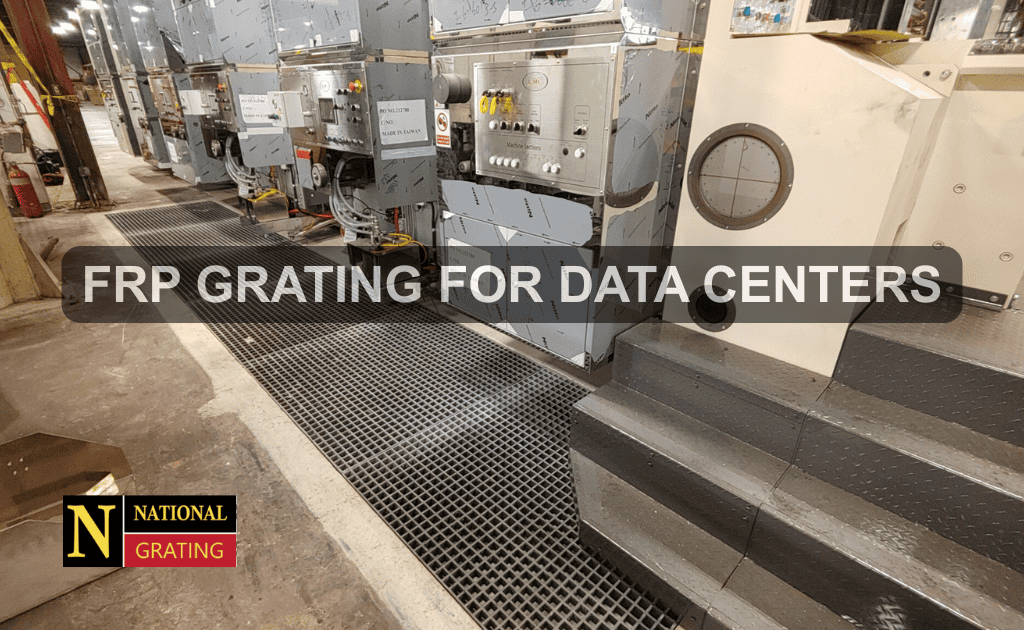
Why Are More Data Centers Choosing FRP Grating Over Steel?
Data centers are full of expensive equipment, tight timelines, and zero patience for avoidable maintenance. That is why flooring and access materials matter more than they may seem at first. In these spaces, fibreglass grating and structural FRP products solve real problems. They resist corrosion, are easier to handle than heavier materials, and facilitate the creation of safe walkways and access points around cooling equipment, cables, and service areas. National Grating stocks FRP grating, beams, angles, and channels across North America and is known for outstanding customer service and quality. That can make a big difference when a job is moving fast.
Why does a grating choice matter so much in a data center?
It affects safety, maintenance, installation speed, and how easily staff can access critical equipment. In a data center, you may be dealing with raised service platforms, rooftop units, cable routes, cooling equipment, mezzanines, and narrow walkways that need to be safe and durable. FRP grating is a good fit for these areas because it resists corrosion, does not conduct electricity, and is easier to install than steel. That helps on projects where crews are working near active systems and need to keep things moving. National Grating carries molded and pultruded products for industrial and commercial use across the U.S. and Canada.
How does FRP grating compare with steel in data center environments?
FRP is lighter, corrosion-resistant, and easier to install, while steel is heavier and more likely to create maintenance issues. The data center has moisture around cooling systems, washdown zones, rooftop exposure, or chemical cleaning areas. Steel can corrode and add weight. Fibreglass grating offers a high strength-to-weight ratio, is easier to handle, and is built for corrosive environments. Fibreglass structures are “electronically transparent,” meaning they do not interfere with radio-frequency transmissions the way steel structures can. That is a useful advantage in technical facilities.
Which type of FRP grating works best in a data center?
It depends on span, load, traffic, and whether the area is a walkway, platform, trench cover, or service deck. For general walkways and access areas, molded fibreglass grating is a common choice because it offers bidirectional strength and good drainage. For longer spans or directional loading, pultruded fibreglass grating may be the better match. In higher-load areas, the heavy-duty fibreglass grating can handle more demanding service conditions, including forklift traffic in some industrial settings. This is where expertise matters. Our team can help you determine what is the best FRP grating for your project. What other FRP products help support data center builds?
Structural shapes and prefabricated framing can support platforms, catwalks, mezzanines, and equipment access systems. Modern data centers often need more than grating panels. They may also need pultruded fibreglass structural shapes, FRP structural shapes, fibreglass square tube, FRP, and fibreglass beams for support framing. These products can be used in fibreglass catwalk systems, mezzanine framing, FRP equipment support frames, and modular FRP platform systems. If you are comparing I-beam sizes and prices, small I-beam sizes, 4 I-beam, 8 I-beam, or broader structural I-beam sizes, FRP alternatives may be worth reviewing where corrosion resistance and lower weight matter more. National Grating is an FRP structural specialist and stocks beams, angles, and other FRP products through distribution centers across America.
Why do inventory and service matter so much on these projects?
Because delays on a data center job are expensive, and missed shipments can disrupt several trades at once. A data center or retrofit usually runs on a tight schedule. If grating, framing, or custom cuts arrive late, installers, electricians, mechanical crews, and site managers all feel it. National Grating has one of the broadest North American inventories, with standard FRP items stocked and ready to ship through a wide distribution network. We also have excellent customer service, competitive pricing, rush order support, and custom cutting and fabrication.
Data-centered materials that work hard without adding extra headaches. FRP grating, structural shapes, and fibreglass platforms can help reduce corrosion risk, speed installation, and improve access in demanding environments. If you are planning a new build or retrofit, contact National Grating for product guidance, custom fabrication, and fast access to one of the biggest FRP inventories in North America.
FAQs
Is fibreglass grating suitable for indoor data centers?
Yes. It is commonly used indoors for service platforms, access walkways, trench covers, and other maintenance areas where corrosion resistance and lower weight are useful.
Can FRP grating be fabricated before it ships?
Yes. National Grating says it offers custom cutting and fabrication, including CNC capability, to help products arrive ready for installation.
Does FRP grating come in standard panel sizes?
Yes. Standard sizes are commonly stocked, though exact dimensions vary by product type and load class. National Grating also offers custom sizes.
Is FRP only for grating, or can it be used for structural framing too?
It can be used for both. FRP is available in grating, Ams, angles, channels, and other structural shapes for framing systems and platforms.